Foundations That Support Your Operation
Secure Agriculture Building Foundations in Bridgewater, VA and Throughout the Shenandoah Valley
You're putting up a barn, equipment shed, or storage building that needs to handle heavy loads and long-span framing, and your foundation must be engineered to support that weight without settling or shifting. In Staunton, Bridgewater or a surrounding area where rural terrain includes varying soil stability and drainage challenges, your agriculture building foundation requires reinforced footers, thickened edges, and careful site prep. Rocktown Construction installs durable concrete foundations designed for agricultural facilities across local farms, delivering level bases that improve building longevity and reduce maintenance over time. Whether you're building a new pole barn, metal structure, or custom agriculture building, you need a foundation that stands up to equipment traffic and weather exposure.
Every foundation pour includes site evaluation to account for soil type, drainage patterns, and load requirements specific to agricultural use. Reinforced footers provide added strength where heavy machinery will operate, and thickened edges resist cracking under concentrated loads. Compatible with a range of building styles, this service ensures your structure stays level and stable for decades.
Request a foundation evaluation for your new or expanding agriculture building and set the stage for reliable performance.
Key Benefits of This Service
Your project starts with a site visit that measures load zones, identifies drainage needs, and confirms soil compaction levels. In Bridgewater, VA and neighboring communities, where farms deal with clay-heavy and rocky soils, proper excavation and base preparation prevent future settling. Steel reinforcement is positioned in footers and perimeter walls to handle concentrated loads from posts, equipment, and roof framing.
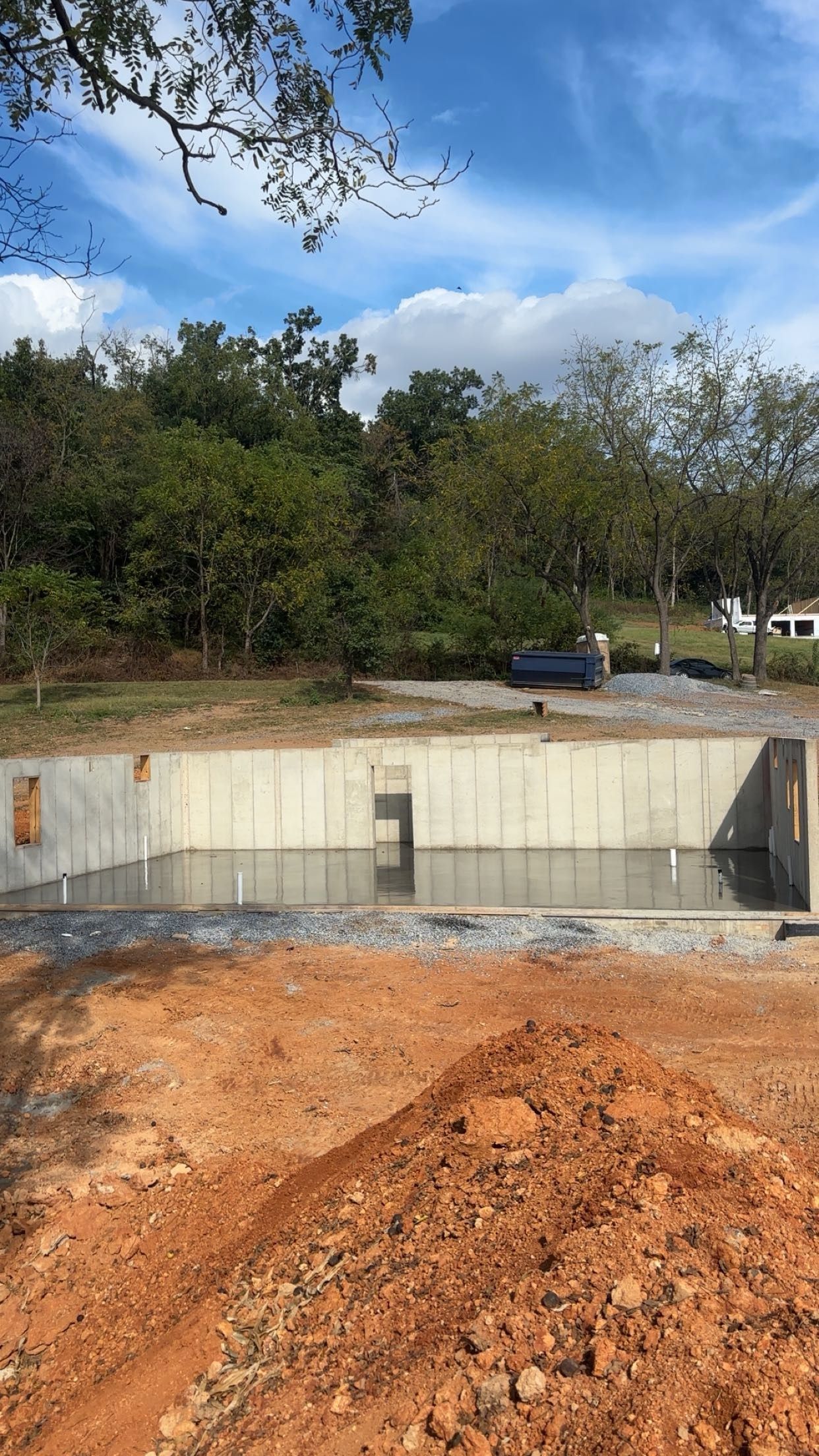
Rocktown Construction pours high-strength concrete designed to support pole barns, metal buildings, and custom agriculture structures used on local farms. Footers are sized for your building's dimensions and load requirements, with thickened edges where tractors and equipment will enter. Level surfaces ensure framing crews can work efficiently without shims or adjustments.
Once cured, your foundation provides a stable base that resists cracking, shifting, and moisture infiltration. Drainage systems are positioned to manage runoff during heavy rain, protecting the integrity of your building and the ground around it.
How Our Process Works
Farmers and agriculture contractors often ask about footer depth, load capacity, and how foundations perform under heavy equipment. These answers address the most common concerns about agriculture building foundations in this region.
How deep are footers for agriculture buildings?
Footer depth depends on building size and equipment loads, but most agriculture foundations in this area use footers between 12 and 18 inches deep. Your site evaluation will confirm the exact depth needed for stability.
You'll get a high-strength mix rated for agricultural loads and outdoor exposure in Bridgewater, VA. The mix includes air entrainment for freeze-thaw resistance and is tested for proper consistency before pouring.
Drainage planning is part of every agriculture foundation project. Gravel bases and perimeter drains are installed to prevent water pooling around footers and protect your building from moisture damage.
Your agriculture building is a long-term investment in your farm's productivity, and a solid foundation protects that investment from settling, shifting, and weather damage. With reinforced footers, thickened edges, and drainage planning, you avoid costly repairs and downtime.
Get in touch now to schedule a site analysis and start planning your next agricultural structure.