Control Grade and Protect Your Land
Lock In Retaining Walls in Bridgewater, Staunton, Harrisonburg and Beyond
You're managing sloped terrain on your farm or rural property, and a reinforced retaining wall gives you the erosion control and soil stabilization needed to protect fields, equipment areas, and structures. In Bridgewater, VA, where the Shenandoah Valley's rolling landscape creates drainage challenges and runoff issues, your wall must be built with steel reinforcement, proper drainage stone, and weep systems to prevent pressure buildup behind the structure.
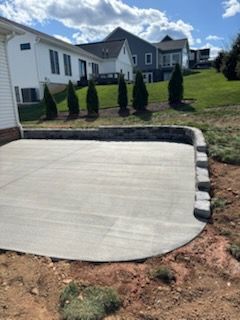
Rocktown Construction builds concrete and block retaining walls designed for long-term durability in agricultural and heavy-use environments, creating usable space around barns, fields, and access roads. Whether you're terracing a hillside or managing water flow near livestock areas, you need a wall that holds firm through seasonal weather and heavy rain events.
Every wall installation includes site analysis to determine height, length, and placement based on your land's grade and drainage patterns. Steel reinforcement is embedded in footers and wall cores to resist lateral pressure from retained soil. Drainage stone and weep holes are positioned to channel water away from the wall face, reducing the risk of bulging or collapse over time. Custom finish options are available to match your property's appearance and functional needs.
Set up a site analysis to determine wall size and placement for your property's grading needs.
What to Expect When You Book
Your retaining wall project begins with a site visit that evaluates slope angle, soil type, and water flow patterns. In Bridgewater, VA, where clay and rocky soils affect drainage and stability, your crew will determine the best wall design and footing depth. Excavation is completed to reach stable soil, and compacted gravel bases are installed to support the wall's weight and drainage system.
Rocktown Construction uses reinforced concrete or block systems depending on wall height and load requirements. Steel rebar is positioned in footers and vertical cores, and drainage stone is backfilled behind the wall to prevent water pressure from building up. Weep systems are installed to direct moisture out through the wall face, keeping the structure stable through wet seasons.
Once completed, your wall provides a stable barrier that controls erosion and creates level areas for equipment storage, livestock feeding, or access roads. You'll have a structure that stands up to farm use and weather exposure without requiring frequent repairs or maintenance.
Details That Matter Most
Landowners often want to know about wall height limits, drainage methods, and how retaining walls perform on rural properties. These answers cover the most common questions about retaining wall construction in the area.
Yes, curved walls are common in Bridgewater, VA for matching property lines or following natural contours. Block systems offer more flexibility for curves, while poured walls work best for straight or gently angled designs.
A well-built retaining wall protects your land from erosion, manages runoff, and creates functional space for farm operations. With steel reinforcement, drainage planning, and durable construction, you avoid the costs of rebuilding or repairing failed walls.
Reach out today to schedule your site analysis and start planning your retaining wall project.