Built Strong From the Ground Up
Schedule Foundation Services in Bridgewater, VA and Throughout the Shenandoah Valley
You're building something meant to last, and every solid structure starts with a foundation that's engineered to hold up under pressure. In the Shenandoah Valley, where soil conditions and moisture levels vary across properties, your foundation needs precision forming, steel reinforcement, and high-strength concrete mixes designed for long-term stability. Rocktown Construction delivers poured concrete foundation walls and footers that meet structural requirements for new homes, additions, and expansions throughout the area. Whether you're breaking ground on a new build or adding square footage to an existing home, you need a foundation crew that understands local terrain and drainage demands.
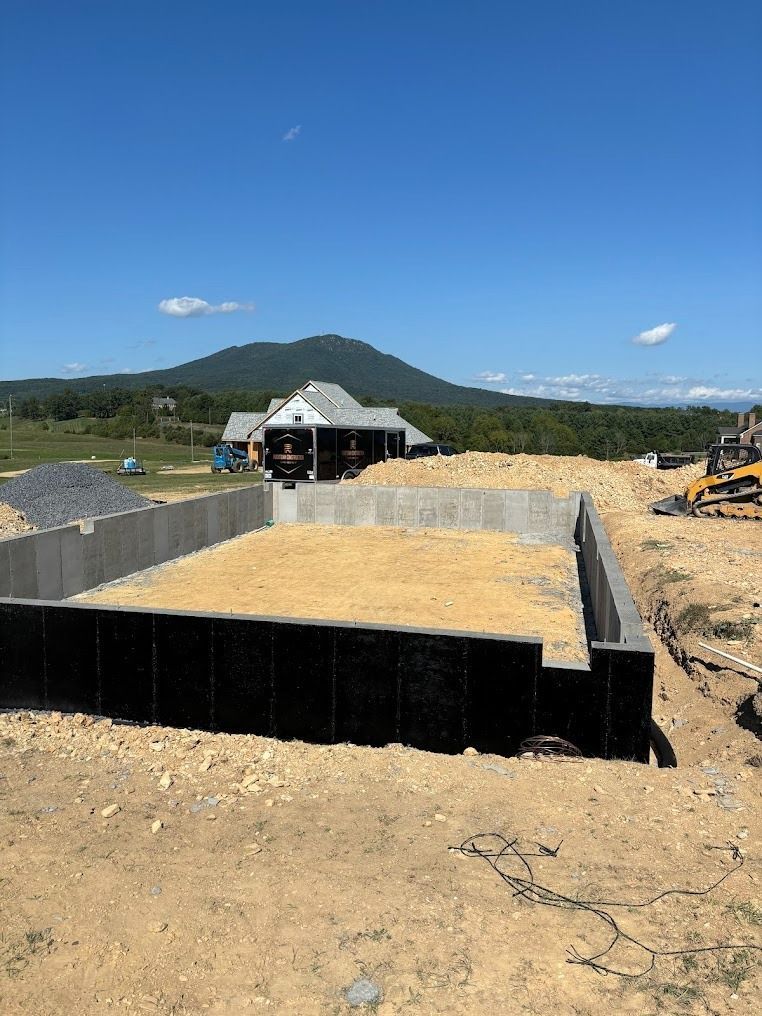
Every foundation pour includes excavation coordination to ensure proper depth and soil compatibility, along with moisture barriers and drainage planning to prevent water issues down the line. Accurate alignment prepares your site for framing crews and keeps your construction timeline on track. This service is designed for residential projects across nearby communities including Harrisonburg and supports everything from single-family homes to multi-room additions.
Request a foundation estimate early in your project timeline and lock in the groundwork that supports everything else.
What to Expect When You Book
You'll start with a site evaluation that assesses soil type, drainage patterns, and the structural load your foundation will carry. In Bridgewater, VA and surrounding areas, where terrain shifts between clay-heavy and rocky zones, this step determines excavation depth and footing width. Your crew will coordinate grading and compaction before any concrete arrives, so the base remains stable through curing and long after your walls go up.
Rocktown Construction uses precision forming systems and steel rebar layouts to create walls that resist shifting and cracking under load. High-strength concrete mixes are poured in stages, with careful attention to joint placement and curing conditions. Moisture barriers are installed during the pour to block water infiltration from surrounding soil.
Once cured, your foundation walls provide a level, aligned surface for framing and exterior work. Drainage systems are positioned to direct water away from the structure, reducing the risk of hydrostatic pressure and future settling. You'll receive a foundation ready for the next phase of construction with no delays or rework needed.
Key Benefits of This Service
Homeowners and builders in the area often ask about timing, soil prep, and what makes a foundation perform reliably over decades. Here are answers to the most common questions about foundation work in this region.
You'll receive a high-strength mix rated for structural load and freeze-thaw cycles common in Bridgewater, VA. The mix includes air entrainment for durability and is tested for proper slump before pouring.
Your foundation sets the tone for every stage that follows, from framing to roofing and beyond. With proper excavation, reinforcement, and drainage planning, you avoid costly repairs and delays that come from settling or water intrusion.
Reach out today to schedule a site evaluation and get your project started on stable ground.